
No products in the cart.

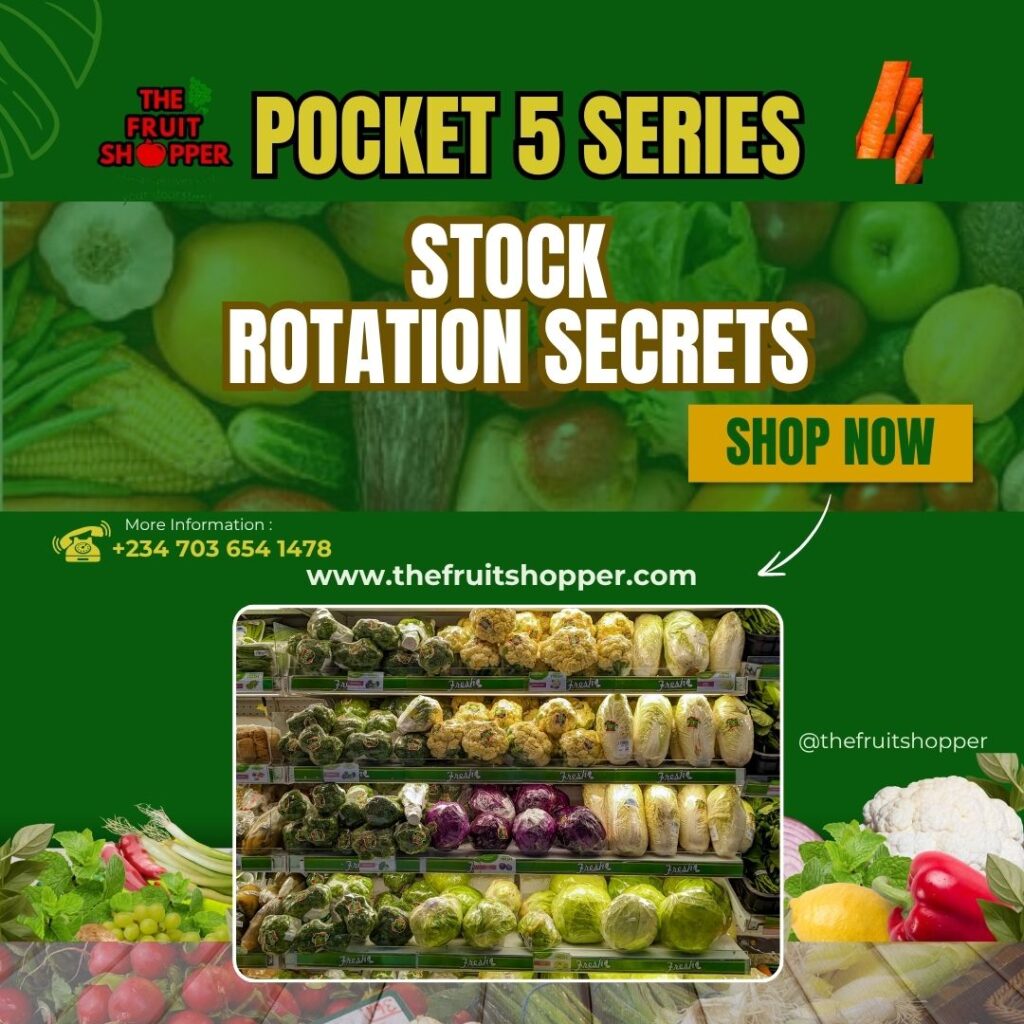
Stock Rotation Secrets | Why Supermarkets Don’t Just Put New Produce in Front
Imagine running a produce section.
You receive a new delivery of tomatoes today.
Yesterday’s tomatoes are still on the shelf.
Where should the new ones go?
If you simply put the new stock in front, customers will naturally pick the freshest-looking produce first and the older stock can remain behind.
Eventually, yesterday’s produce becomes today’s waste.
Professional food operations solve this with a simple but powerful principle:
First In, First Out.
FIFO.
The produce that arrived first is positioned to be used or sold first, while newer stock is placed behind it where appropriate.
It’s more than an organizational trick.
It is a way of managing time.
Some professional food operations use receiving records, date markings and rotation systems to track when produce arrived and ensure older inventory is used before newer inventory. USDA guidance for produce operations specifically describes date-marking and FIFO rotation as part of proper storage practices.
You can use exactly the same principle at home.
When you buy groceries:
Put older produce where you can see it.
Place newly purchased produce behind it.
Keep the produce that needs to be eaten first at eye level.
And don’t keep buying more of something simply because it is on sale if you already have more than you can use.
Here’s a simple weekly rule:
“Eat what is closest to its deadline first.”
Bananas becoming very ripe?
Use them before the new bunch.
Spinach bought last week?
Prioritize it before opening the new bag.
Older strawberries?
Eat those first.
You don’t need a supermarket warehouse to use professional inventory management.
You just need to stop treating every grocery item as though it has the same remaining shelf life.
What is the oldest item currently sitting in your refrigerator?
For more smart shopping freshness tips and to shop fresh produce, visit: www.thefruitshopper.com